Eating to Be Powerful, Not to Be Small
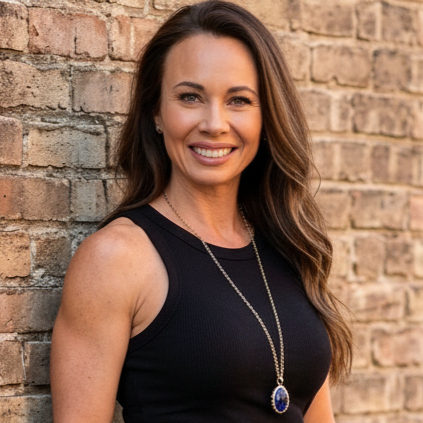

For Kim Abrego, this episode's topic is about as personal as it gets. Her relationship with food was shaped early, during years of training at Canada's National Ballet School, where body shape was judged as closely as technique. At 15, after her body changed through puberty, she was told she no longer had the shape to be a professional ballerina, and her relationship with food, for years afterward, centered on keeping the scale from ever going up.
The shift came later, after the birth of her second child, when Kim took up competitive bodybuilding, a sport that, unlike ballet, required her to deliberately gain muscle and eat significantly more food. Working with a coach who prioritized long-term health over short-term aesthetics, Kim had to relearn eating as something that fueled performance rather than something to be minimized.
The core of this episode is a practical framework: eating protein-forward, roughly one gram of protein per pound of bodyweight per day (around 150 grams for the average woman). Kim explains why this matters more as we age: muscle mass naturally declines from around age 30 onward, and protein intake combined with resistance training is one of the most effective ways to combat that loss.
Kim also flags two commonly overlooked pieces. First, cutting carbohydrates too aggressively can quietly damage sleep quality, specifically deep sleep and REM, which matters because, as she puts it, sleep protects everything else. Second, fat shouldn't be minimized either: quality fats (avocado, olive oil, coconut oil) support hormone production, and cutting them out can interfere with how hormones move through the body.
Rather than obsessing over macros or tracking every gram, Kim's guidance is simpler: build each plate around a protein source first, add vegetables and carbs, and include a little quality fat. For busy or high-travel days, she recommends a clean protein shake (minimal additives, no artificial sweeteners) as an easy way to hit protein targets without a full sit-down meal.
The episode also touches on training: for women looking to lose weight, Kim argues resistance training is a better primary tool than cardio alone, since building muscle increases the rate at which the body burns calories at rest, creating a compounding effect over time. The episode closes with Kim's central reframe: don't eat to be small. Eat to be powerful.



Comments